Children’s rights in Scotland have a stronger legal foundation and a more prominent place in public services two years after the United Nations Convention on the Rights of the Child was incorporated into Scots law.
However, Scotland cannot yet claim that those rights are being delivered consistently for every child.
The United Nations Convention on the Rights of the Child (Incorporation) (Scotland) Act 2024 came into force on 16 July 2024. It was a landmark moment, making Scotland the first UK nation to directly incorporate the UNCRC into domestic law.
The legislation requires public authorities to act compatibly with the UNCRC requirements covered by the Act. It also strengthens the ability of children, young people and their representatives to challenge certain decisions when they believe their rights have not been respected.
The law matters. But legislation alone cannot guarantee that every child will experience their rights in everyday life.
What progress has been made since incorporation?
There are encouraging signs that the UNCRC Act is influencing how children’s rights are understood. Tracking this shift matters because it shows children’s rights in Scotland moving from principle into day-to-day decision-making.
A recent Children in Scotland article marking the two-year anniversary highlighted a growing awareness of children’s rights across education, social work and other public services.
Contributors described the beginning of a change in how challenges are understood. Instead of automatically locating a problem within the child, there is greater willingness to consider the structural barriers that may prevent them from accessing education, support or other services.
There is also a developing shared language around rights. Children’s rights are increasingly being viewed as an essential part of planning and decision-making rather than an optional consideration.
This is important progress. However, those working across Scotland’s children’s sector are clear that incorporation should be understood as the beginning of a longer process.
What does delivering children’s rights look like in practice?
For organisations working with children and families, a rights-based approach should be visible in everyday practice.
It should influence:
- how children are involved in decisions;
- how their views are gathered and recorded;
- whether information is presented in an accessible way;
- how care and support plans are developed;
- how decisions are explained;
- how complaints and concerns are handled; and
- whether barriers to participation are identified and addressed.
Recording that a child was consulted is not enough on its own.
Professionals should also be able to demonstrate what the child said, how their views were considered and whether those views influenced the eventual decision. Where a different decision was made, the child should receive an appropriate explanation.
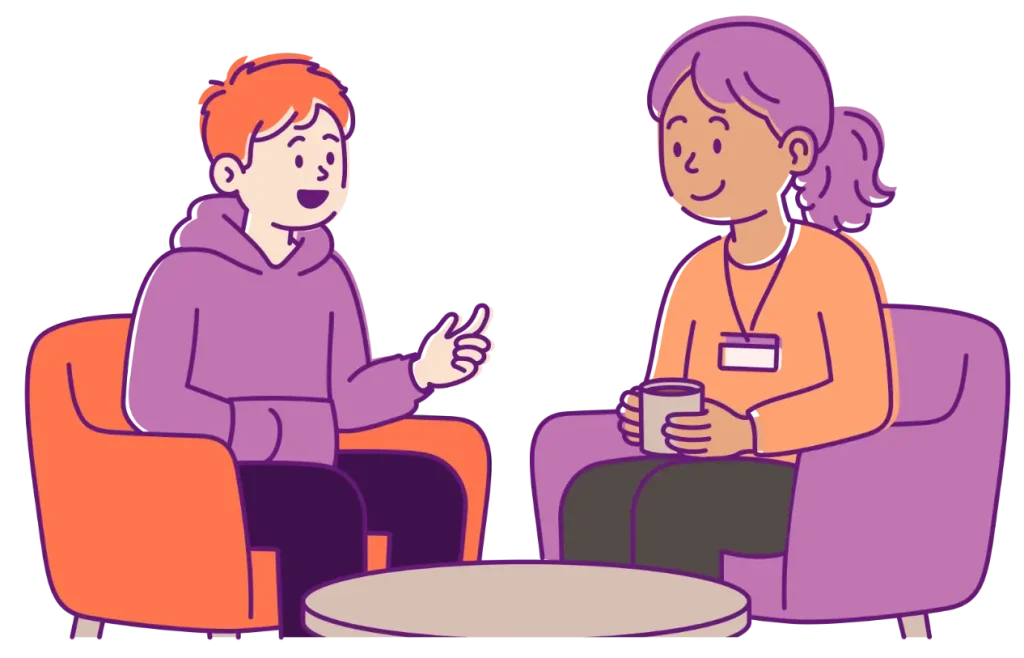
Meaningful participation does not mean that children must make every decision. It means they are given suitable information, supported to express their views and taken seriously by the adults responsible for decisions affecting their lives.
How do the UNCRC and GIRFEC work together?
Children’s rights are already closely connected to Getting it right for every child.
GIRFEC places the child and family at the centre of assessment, planning and support. Its SHANARRI wellbeing indicators encourage professionals to consider whether a child is Safe, Healthy, Achieving, Nurtured, Active, Respected, Responsible and Included.
The UNCRC strengthens this approach by providing a clear rights-based foundation.
For example, being Respected should include more than treating a child kindly. It should mean creating genuine opportunities for the child to express their views and ensuring those views are given appropriate weight.
Being Included should involve identifying the practical, communication or environmental barriers that prevent a child from participating fully.
Being Safe should include protection from abuse, neglect, violence and bullying, alongside accessible ways for children to raise concerns.
GIRFEC and the UNCRC should not be treated as separate areas of work. When applied effectively, they reinforce the same central principle: decisions should be made with children, not simply about them.
Where does the implementation gap remain?
The experience of children’s rights can still vary considerably depending on where a child lives, the services they use and the support available to them.
Children may technically be offered an opportunity to contribute while having little real influence over the outcome. Some may receive information that is not appropriate for their age, development or communication needs. Others may not know how to question a decision or make a complaint.
Children with additional support needs, care-experienced young people and children facing poverty or discrimination can encounter further barriers to having their rights understood and upheld.
There are also limits to the protections provided by the Act. Some areas affecting children’s lives are underpinned by legislation passed at Westminster and therefore sit outside the full reach of the Scottish Act.
These challenges do not reduce the importance of incorporation. They demonstrate why sustained implementation, workforce development and accountability are still required.
Turning rights into evidence
Organisations should be able to show how children’s rights influence practice rather than relying only on policies or statements of intent.
Useful evidence might include:
- child-friendly consultation materials;
- records of children’s views in care or support plans;
- examples of decisions changed following a child’s contribution;
- accessible complaints procedures;
- staff training and reflective practice;
- feedback from children and families;
- evidence that participation methods are adapted to individual needs; and
- reviews of whether children experience services as rights-respecting.
Digital records can play an important role, but only when they capture meaningful information. A completed participation field does not prove that a child felt heard. The quality of the conversation, the response and the resulting action are what matter.
Questions for organisations and professionals
Two years after incorporation, every organisation working with children should be asking how well they are embedding children’s rights in Scotland into daily practice, including:
- Do children understand the decisions being made about them?
- Can they express their views in a way that works for them?
- Do our records show how those views influenced the decision?
- Are our complaints processes genuinely accessible to children?
- Can staff recognise when organisational barriers are preventing a child from accessing their rights?
- Do we ask children whether they feel listened to, respected and included?
- Can we demonstrate improvement through evidence rather than intention?
Children’s Rights in Scotland: Progress Made, But the Work Is Not Finished
The incorporation of the UNCRC was an important step forward for Scotland. It has strengthened the status of children’s rights and encouraged public services to look more closely at how decisions affect children and young people. This progress connects closely with wider practice on how GIRFEC aligns with children’s rights, and it is a reminder that embedding children’s rights in Scotland must remain a practical, everyday priority rather than just a legal formality.
But Scotland will only fully deliver on that commitment when children experience their rights consistently in classrooms, care settings, family support services and every other part of their lives.
The next stage is not simply about increasing awareness of the UNCRC. It is about turning rights into everyday actions, accountable decisions and experiences that children themselves recognise as fair, respectful and inclusive.
That is where legislation becomes practice — and where Scotland’s commitment to getting it right for every child must ultimately be judged.

 Residential Care Insights





 Care Professionals